An Awfully Big Adventure by Beryl Bainbridge
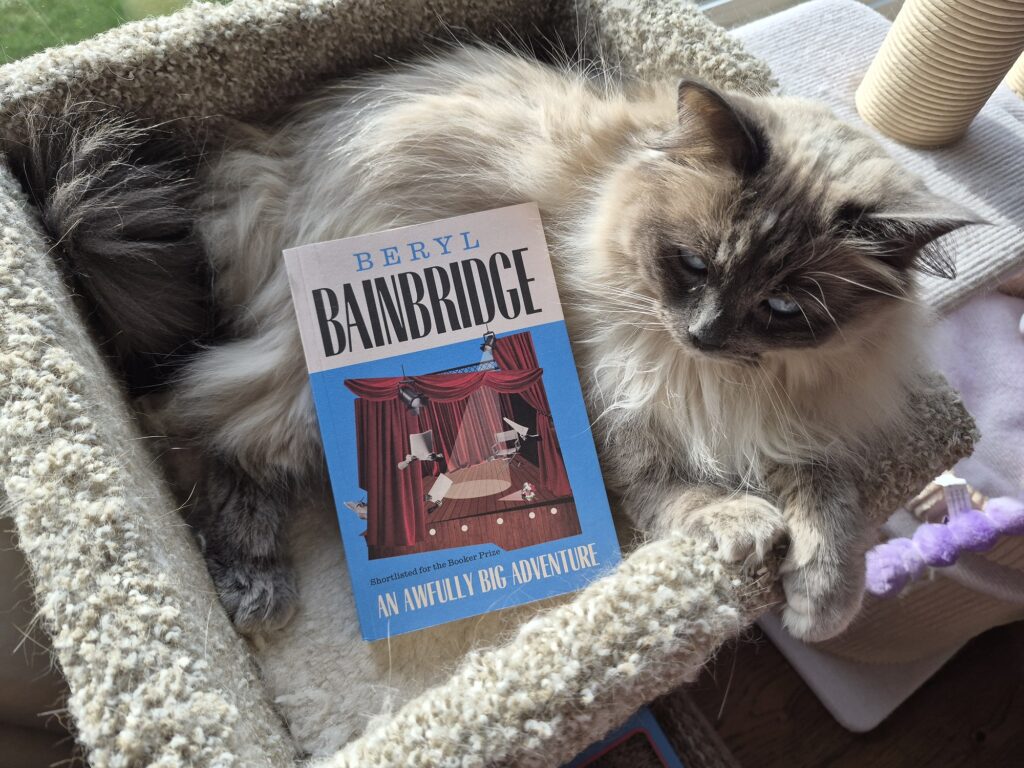
An Awfully Big Adventure was originally published in 1989 and is set in Liverpool in 1950. Beryl Bainbridge was shortlisted for the Booker Prize for this novel, and was nominated four other times, but never won. I bought An Awfully Big Adventure from Daunt Books in Marylebone, London on my recent trip to the UK. I bought this novel because it is supposed to be a “darkly comic novel” about a theatre company, but I do not find anything comic about An Awfully Big Adventure because all the characters in the novel are pathetic.
An Awfully Big Adventure is about a sixteen-year-old girl named Stella who is not very good at school, so instead of sitting for exams, her uncle gets her job as an assistant stage manager with a local repertory theatre company. She becomes infatuated with the director, Meredith, who pays no attention to her for reasons that are obvious to everyone but a sixteen-year-old girl in the 1950s, apparently.
Stella spends the novel fending off unwanted advances from men and being sexually assaulted, but the tone of Bainbridge’s novel is so matter of fact that it makes the offences against Stella even more disgusting and infuriating. This novel really makes a case that society has failed girls in educating them on the behaviour they should expect from men and how they should react to it, because Stella is nonplussed by some strange man sticking her hand in his pants.
In spite of what happens to Stella, I found myself not liking her because she is cold and unfeeling. She does not show any affection or appreciation for anyone, including her aunt and uncle who raised her. Not even what she feels for Meredith is affection because she just sees him as a means to end her virginity. It seems strange to me to have a teenage character who is so emotionless because I remember my teenage years being hormonal and full of emotion.
An Awfully Big Adventure ends rather abruptly with a shockingly gross revelation, and a couple of weeks after finishing it, I am still wondering what is the point of this novel and why was it nominated for the Booker Prize. Feel free to explain it to me if you figure it out. All I know is that Bainbridge’s writing is not my cup of tea.