Lady Tremaine by Rachel Hochhauser
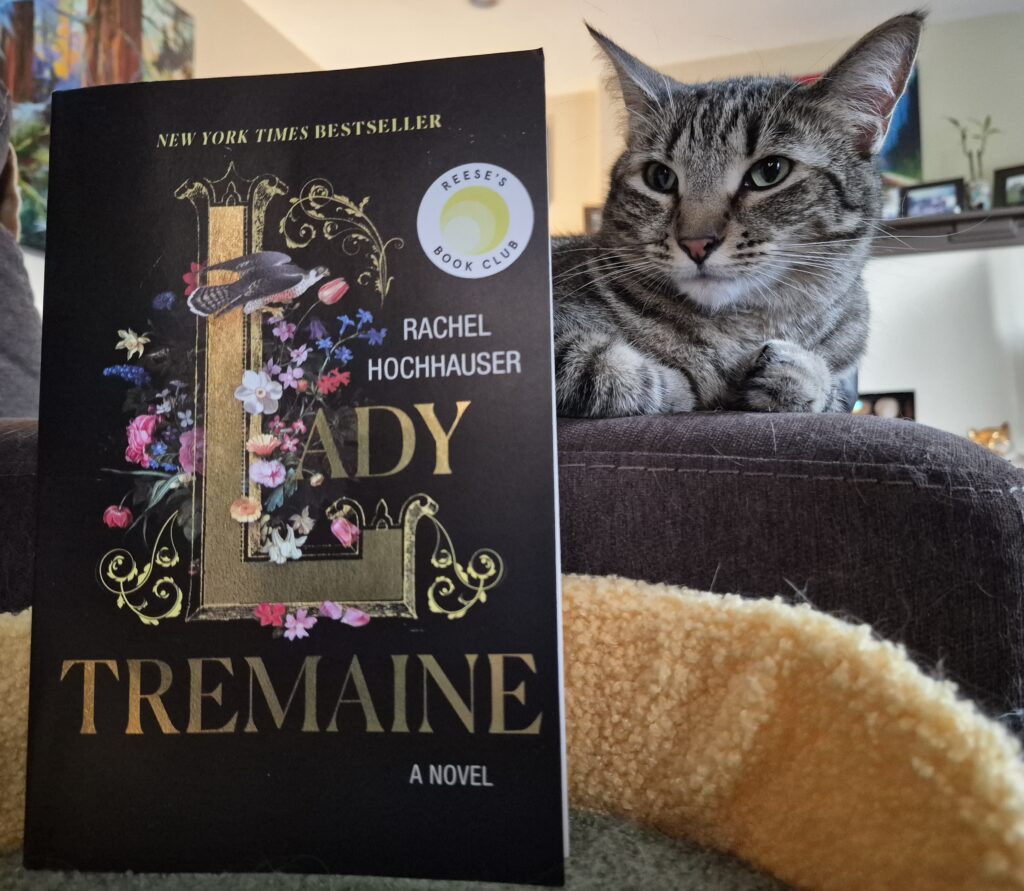
Lady Tremaine is Rachel Hochhauser’s first novel. It is a retelling of Cinderella from the perspective of the “wicked” stepmother. I’ll admit the pretty cover is the reason why I bought this book, and it is always a treat when the story turns out just to be as good as its cover.
Everyone knows the Disneyfied version of Cinderella that pushes the narrative that if you are a kind, obedient girl you will find a “Prince Charming” to make you his bride and you will live happily ever after. A similar narrative is still being shilled today by Instagram tradwives, ignorant women barely out of their teens who either don’t know or don’t care about the reality of a woman’s role in marriage. Lady Tremaine, on the other hand, does not hold back when it comes to depicting the actual treatment of women at the hands of men.
Lady Tremaine is about a woman named Lady Etheldreda Tremaine Bramley, twice widowed and struggling to take care of her two daughters and stepdaughter on her own. Ethel had been taught since she was a young girl that a woman’s purpose in life is to find herself a husband, but she had to learn on her own what happens when she no longer has a husband’s protection. Her first husband, a love match, dies and she has no money of her own to take care of her daughters. In order to protect her daughters from being sold off into marriage by her father-in-law, she finds herself another husband, a widower with a daughter of his own named Elin, but this marriage does not last very long either before her second husband’s dies, leaving his fortune tied up in a dowry for Elin and no money for Ethel to maintain the estate that she has inherited from him.
Real life isn’t as simple as the good versus wicked found in fairytales. What is great about Lady Tremaine is how authentic and complex Ethel is as a character. She is not a wicked stepmother; she is a woman doing what she can for herself and her daughters (who are also not wicked by the way) in a world run by men. Ethel is a kind woman who treats the two servants she has left as family; she is a strong woman who is not afraid to get her own hands dirty to keep her family clothed and fed and a roof over their heads (kind of); she is a pragmatic woman who knows the importance of keeping up appearances even while discreetly pawning off everything of value left in the house; she is an exacting woman who expects everyone else in the household, including her daughters and step-daughter, to pitch in and get their hands dirty as well.
Elin is nothing like the fairy-tale Cinderella. She is a priggish girl who rebuffs Ethel’s attempts to be a mother to her, clinging to her dead mother’s etiquette book and quoting ridiculous things like, “A good wife is a man’s best wealth” (Ha!). Spoiled by an indulgent father, Elin contributes nothing to the household as she can’t be considered a lady if she does housework, yet she is ungrateful for the labours of others that keeps her alive. It is no wonder that Ethel is often angry with Elin. Making Elin a spoiled brat is an interesting choice because it makes it too easy for the reader to sympathize with Ethel, but at one point even I thought that Ethel’s behaviour towards Elin was way too harsh – until Elin shows up at the royal ball in Ethel’s wedding dress from her first, happy marriage, then I was like, nah fuck that brat.
As in Cinderella, Lady Tremaine features a royal ball and a prince looking for a wife. Ethel sees the ball as an opportunity to introduce her daughters into society so that they can find husbands, but Elin is the one who secures an engagement from the prince. Ethel is pissed that her ungrateful stepdaughter is the one who will be elevated to royalty, but she knows this is good fortune for her daughters as well. Until she learns a disgusting secret about the royal family and finds herself caught between her love for daughters and her desire to see them succeed in life, and her duty as a stepmother to protect the stepdaughter that even she can admit she hasn’t tried hard enough to develop a relationship with.
Lady Tremaine is a gripping story about women learning to shake off the yoke of patriarchy and securing a future on their own terms. There is something exquisite about Hochhauser’s writing in this novel: “So many times in my daughter’s life I had watched her shed tears and dismissed them. I wanted to collect them, just then – those salty drops – and assure her of their validity”. I am very interested to see what novel Hochhauser comes up with next.