Land by Maggie O’Farrell
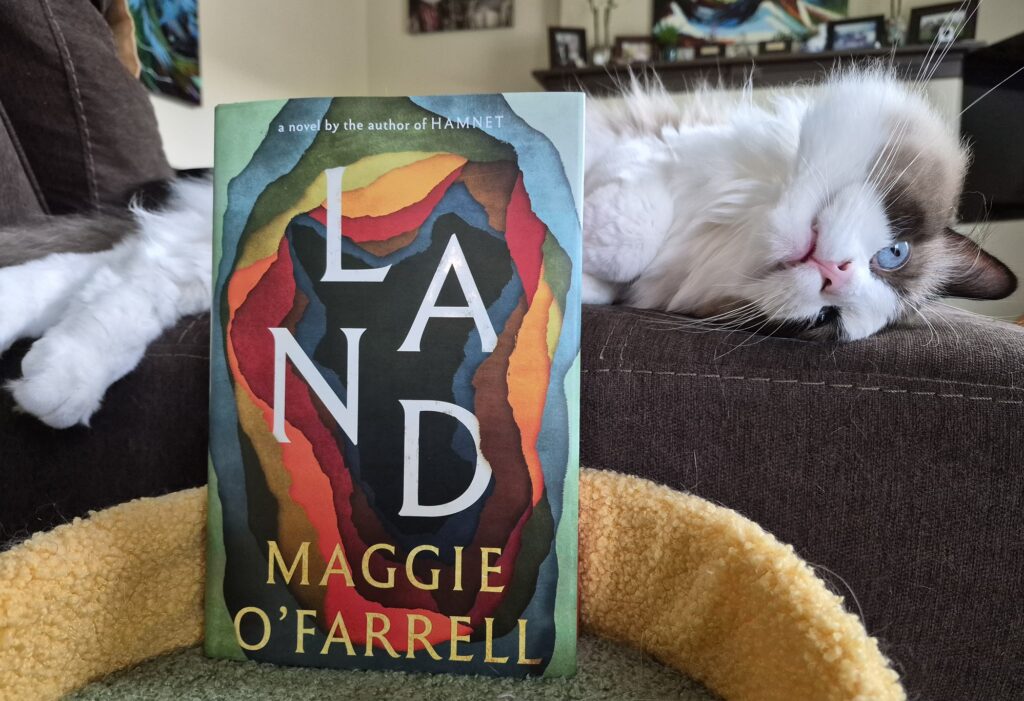
Land is the eagerly anticipated new novel from Maggie O’Farrell, author of The Marriage Portrait and Hamnet, which was recently made into an Oscar winning film. I really enjoyed reading this novel and O’Farrell has found a place on my list of authors whose new books I will always look forward to reading.
Land begins in 1865 in the aftermath of the Great Hunger (the years of mass starvation and disease in Ireland that led to the deaths of around one million people and the migration of the Irish to other countries) and is about an Irishman named Tomás, a surveyor working for the British army to map the whole of Ireland. Tomás’s son, Liam, is his reluctant helper. They are mapping a peninsula on the northwestern coast of the country when they come across a strange, unsettling copse with a pool of water inside. Tomás disappears into the copse for hours; when he emerges, he is a changed man, raving about how he will no longer work for the Redcoats and how he will create his own map of the real history of the land. Tomás is presumed to have gone mad, or become possessed by a demon, according to the local Catholic priest who is eager to perform an exorcism, but regardless of what has happened to Tomás in the copse, it irrevocably alters his life and the lives of his wife and children as he moves his family from Dublin to an abandoned cottage on the peninsula.
Land is about our relationship with land, how we have moulded and shaped it to suit our needs, for better or for worse, but how the land still holds vestiges of how it used to be and how the people who came before us used to live. It is about how land is divided between those who own it and those who do not, how foreigners take over land from the indigenous population and the indigenous population suddenly find themselves servants on a land that used to belong to them. There is a thrilling section of the novel that traces the history of the peninsula from the original tribes that inhabited the peninsula to the occupation of the peninsula by the English to the arrival of Tomás and his family.
O’Farrell has a gift for turning the mundane into an engrossing read. Her writing enveloped me into the historical world that she has created. I could feel the wind sweeping across the peninsula; I could hear the nearby bog squelching beneath my feet; I was unsettled by the eerie stillness of the copse; I was there with Tomás and his family as they farm the land they rent from the local viscount; I anxiously wondered with them how they would be able to keep feeding themselves as they live hand to mouth while the viscount keeps raising their rent.
Land is also a powerfully rendered family history rooted in a tragic historical event. The characters that O’Farrell has created are equal turns endearing and frustrating. I particularly did not like the impulsive Enda, Tomás’s eldest daughter, but Tomás’s family as a whole I was heartbroken for as they fractured apart, separated by death or their animosity towards each other or their desire for something more than life on the peninsula. Land is at times a melancholy story, but it comes to an affecting and satisfying conclusion.