The Girl with a Thousand Faces by Sunyi Dean
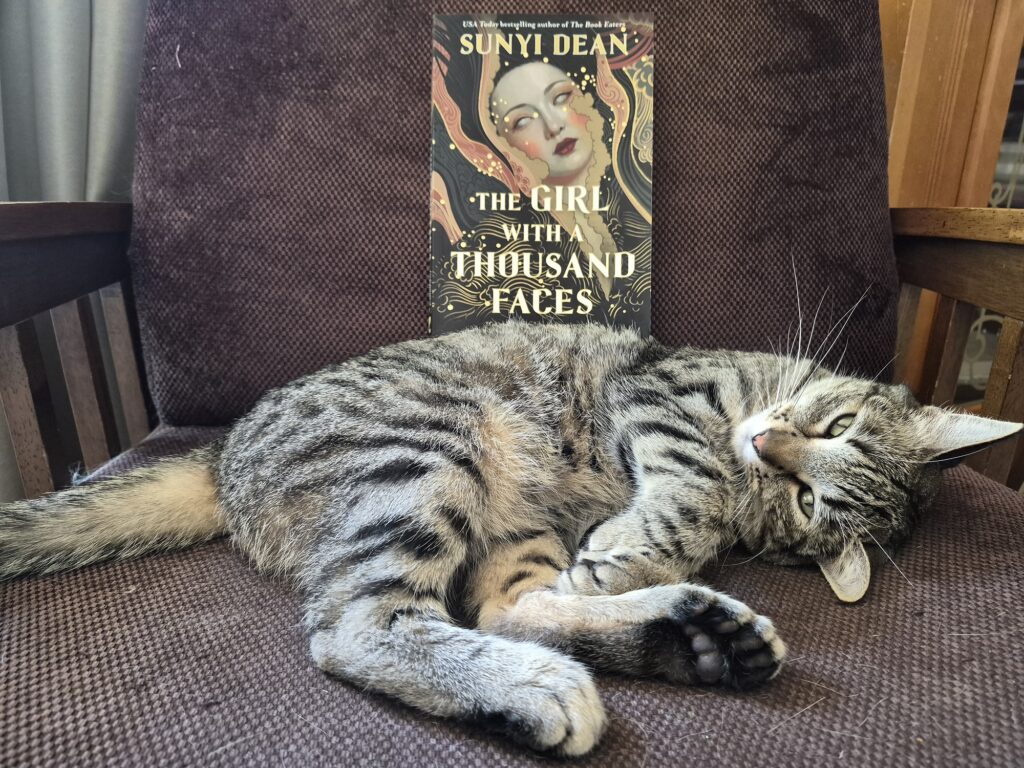
The Girl with a Thousand Faces is The Book Eaters author Sunyi Dean’s second novel. I absolutely love the haunting cover of this novel, but I am sorry to say that I do not feel as strongly for the contents of the story.
The Girl with a Thousand Faces is about a woman named Mercy Chan who lives in Kowloon Walled City, a ghost-infested slum in Hong Kong. Mercy has no memory of her life before she washed up on the shores of Hong Kong thirty years earlier during WWII. She works for a triad leader named Cobra Lily as a sort of exorcist, although instead of forcing ghosts into the afterlife, she talks to them to help them figure out what it is they need to do before they can move on.
Cobra Lily is trying to keep Kowloon Walled City from being demolished, but there has been an increase in mysterious deaths in the slum. She sends Mercy to investigate, and Mercy discovers a powerful “water spirit” is wreaking havoc on the slum, and this spirit claims to know Mercy and her forgotten past.
The Girl with a Thousand Faces has an intriguing premise and starts strongly. It tells an alternative history where ghosts play a big role in WWII with the ghosts of Chinese people helping to fight against the Japanese invaders. It is interesting how ghosts are worked into societal constructs in Dean’s novel. People who are oppressed in life are usually the ones who come back as ghosts, and because of this, most ghosts are women and children and there are few male ghosts. Asian cultures are more respectful towards ghosts because of a strong sense of familial duty, whereas Western cultures do not view ghosts as people anymore and are only too happy to punt grandma’s ghost into the afterlife.
I really enjoyed getting to know the world that Dean has created in The Girl of a Thousand Faces and getting to know about Mercy and her mysterious past, but the second half of the novel is when my enjoyment of the story started to fall apart. To keep things as spoiler free as possible, a character is introduced later in the story who becomes hell bent on vengeance. I could understand why this character wants vengeance and why the feeling of vengeance is strong in this character, but it became a real drag to read about, even with the point being that constantly seeking vengeance is tiresome. It was just too much, and I wanted the story to hurry up and end.
Another aspect of this novel that made me wish the story would hurry up and end is that the second half of the novel, once it switches to another character’s perspective, has too much explanation. I felt like I was watching a Netflix show where the characters keep informing the other characters of what they are doing because the viewer is too busy on their second screen to keep track of what is going on in the story, only in book form. I didn’t need the events that already happened in the novel re-explained to me just because the novel switched perspectives. Maybe some readers will appreciate this, but I found it to be a slog to read.