The Blood of Others by Simone de Beauvoir
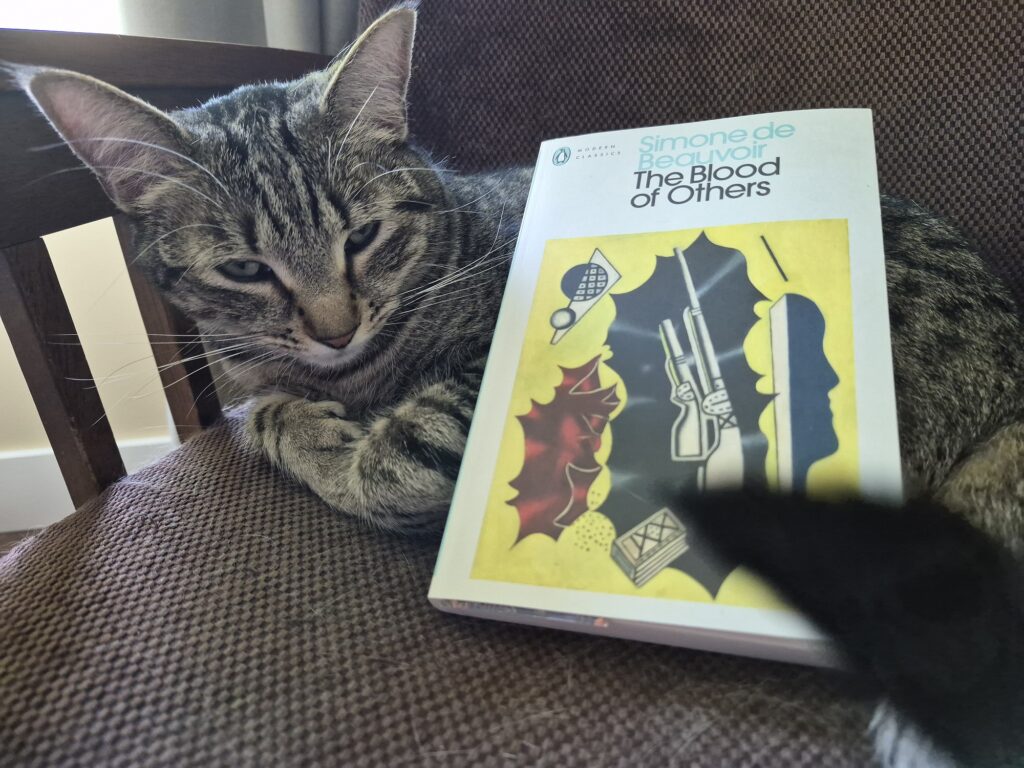
I bought The Blood of Others during my trip to Paris last year from the Shakespeare and Company bookstore. It felt appropriate to buy a book written by a French author, and I choose The Blood of Others because it is about fascism in Europe before and during WWII, which feels like a timely topic given the current global political climate.
I had somewhat of a hard time reading The Blood of Others because of the way it is written. The scenes sometimes shift abruptly, and it is not always clear who is speaking and who they are speaking to. I had to go back and reread some passages to get my bearings. I felt like I didn’t fully understand what was going on in the story, so I did some Googling after I finished the book, and apparently I followed along with the story better than I thought.
The Blood of Others begins in the midst of WWII with French resistance leader, Jean Blomart, waiting through the night next to the bedside of his former fiancé, Hélène, who is dying from a gunshot wound. The novel looks back on their lives in the years prior to the war and their relationship. Jean grew up bourgeois, but he began to feel guilty about his privileged life and broke off with his family to become a member of the working class. He initially joined the Communist Party, but after his friend dies in a political protest, Jean feels guilty for his friend’s death and leaves the Communist Party to focus on trade unions.
Jean does not feel like an authentic character to me because he is so much in his own head about how his actions could negatively affect others. When fascism begins to spread from Germany to the rest of Europe, Jean decides he doesn’t want to try to stop it from spreading, even though he knows he should, because he doesn’t want to be responsible for any of his fellow Frenchmen losing their lives through his encouragement to fight against the Nazis. Am I supposed to believe that Jean is a selfless person? Or maybe he is just clinging to the bourgeois attitude that the plebeians are not capable of individual thought or responsibility for their own actions. He kind of comes across as a narcissist. But what’s worse is that Jean’s inaction only makes him complicit in the spread of fascism, and that is why I think this novel’s themes are important today. If you do not take a stand against what is wrong, then you are only encouraging it to flourish.
Hélène is much younger than Jean; she is still a teenager when she first meets him. Hélène has the impetuousness of youth. She is bored with her life and bored with her fiancé Paul. She contrives to meet Jean against Paul’s wishes and upon meeting him, she talks Jean into stealing a bicycle that she has been coveting (in Jean’s defence, he didn’t know it wasn’t her bicycle). Hélène inexplicably falls in love with Jean. She doesn’t seem to realize that they have nothing in common, and she doesn’t respect his opinions or his feelings. Jean, for his part, just wants Hélène to be happy and tells her that he loves her, even though he really doesn’t, and asks her to marry him (for real, though, does this seem like something a man would actually do??).
Hélène is inherently a selfish character and her actions once war arrives in Paris leads Jean, who has accepted he must fight and becomes a soldier, to end their relationship. But Hélène’s experiences during the German occupation cause her to leave her selfishness behind. Although I spent most of the novel disliking her, Hélène’s death was an affecting end to the story and hit me harder than I thought it would.